Choosing sustainable packaging is rarely as simple as selecting the option with the strongest environmental message. For procurement and ESG teams, the more useful question is whether a packaging choice can be reviewed, documented and explained with confidence.
Before changing suppliers or introducing a new packaging format, ask three questions. Is the claim supported by appropriate evidence? Are the documents needed for internal review available? And can the decision be described clearly in an ESG or sustainability report?
This checklist will not decide which material is right for every business. It will help teams make a more disciplined decision before a claim becomes part of a purchase order, a customer conversation or a public report.
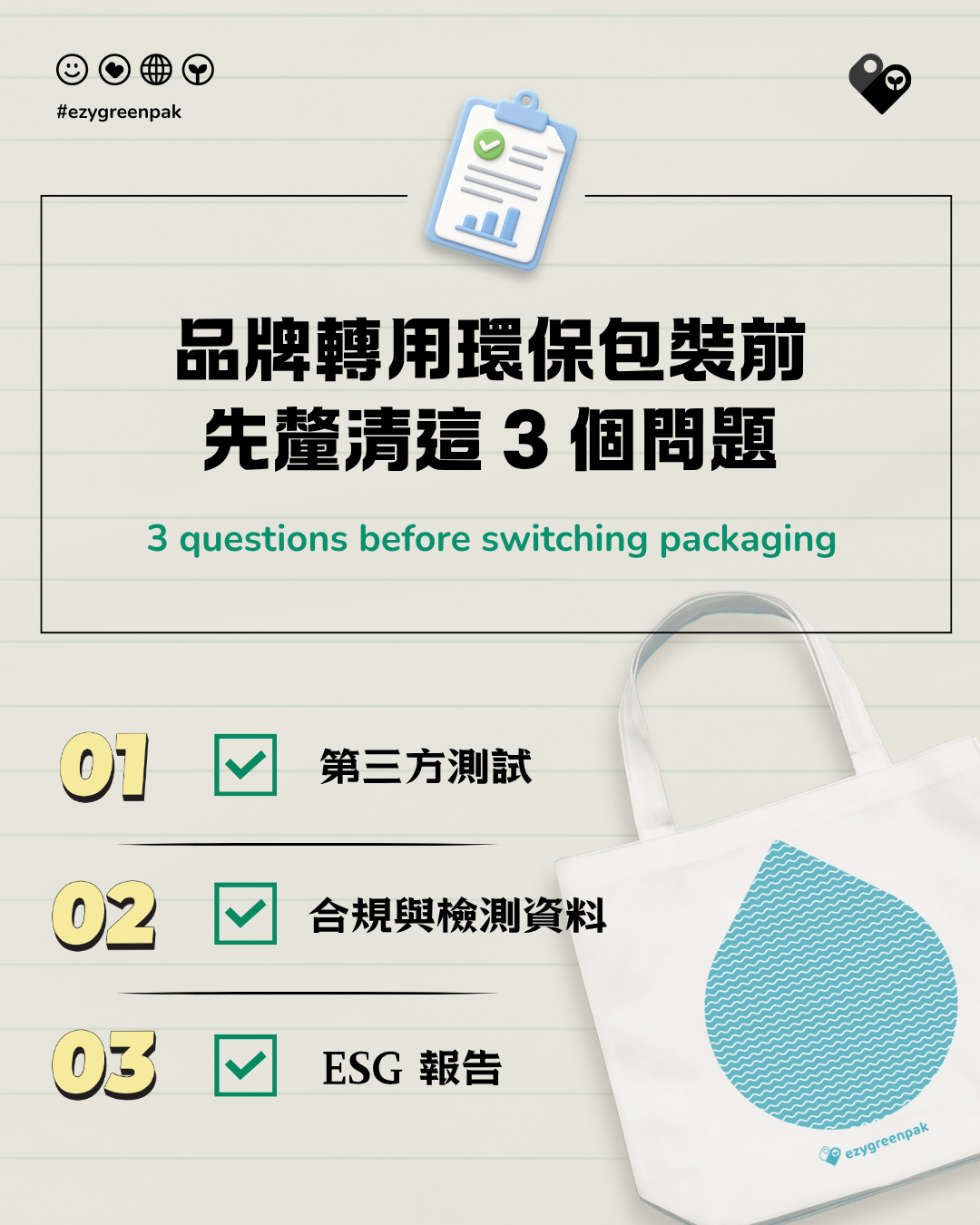
1. What exactly is the packaging claim?
Start with the precise claim being made. Broad terms such as sustainable or eco-friendly can point to very different qualities, tests or intended uses. A claim is easier to review when it is specific about what it refers to and what it does not promise.
Ask the supplier to explain the claim in plain language:
- What feature or outcome does the claim describe?
- Does it apply to the material, the ink, the production process or the end-of-use stage?
- Is the claim relevant to the way your organisation will use the packaging?
- Are there conditions, limitations or handling requirements that need to be understood?
This step matters because a good purchasing decision is not built on a label alone. It is built on a shared understanding of what the product is designed to do and what evidence supports that description.
For an ESG team, clarity also prevents a common problem later: a short marketing phrase is copied into a report, but no one can explain the underlying basis when a colleague, customer or auditor asks for detail.
2. Can the supplier provide the documents needed for review?
A packaging claim should be accompanied by information that a procurement team can examine. The right documents will vary by product, market and intended application, but the process should be straightforward: request the relevant supporting material, confirm its scope, and keep a record of what was reviewed.
Useful questions include:
- Is there third-party testing or other supporting documentation for the claim?
- Which product or material does the document cover?
- Is the document current and suitable for the intended market or application?
- Are there compliance, chemical-safety or product-information documents available where relevant?
- Who within the supplier’s team can explain the documentation if questions arise?
The goal is not to collect paperwork for its own sake. It is to make the decision traceable inside the organisation. When the person who selected the packaging is not the person who later prepares a report or answers a customer question, a clear evidence trail saves time and reduces risk.
A supplier should be able to support a practical review process. If documentation is unclear, incomplete or unrelated to the item being purchased, that is a reason to pause and ask further questions before making a commitment.
3. Can your team explain the decision clearly?
The final question is about communication. A packaging decision may need to be explained to leadership, customers, retail partners, event organisers or colleagues preparing ESG disclosures. If the explanation becomes complicated, uncertain or overly broad, the team may need more evidence before moving forward.
A useful internal summary should answer four points:
- What packaging choice is being made?
- Why is it appropriate for this use case?
- What supporting information has been reviewed?
- What wording can the organisation use publicly, and what should remain internal?
This does not mean every purchase needs a long report. It means the team should be able to make a short, accurate statement without overstating what the product or its documentation demonstrates.
For example, it is better to describe a verified feature with its proper context than to make a sweeping environmental promise. Specific, supportable language is easier to approve internally and more credible externally.
Turn the checklist into a working process
These three questions work best when they become part of the purchasing workflow, not a one-off exercise. Teams can include them in supplier onboarding, packaging briefs, product-development meetings or campaign planning.
A simple process may look like this:
- Define the intended use and the claim that matters for that use.
- Request and review the relevant supporting documents.
- Record the decision and the approved public wording.
- Revisit the evidence when the product, supplier or use case changes.
This approach gives procurement and ESG teams a common language. Procurement can focus on availability, suitability and documentation. ESG teams can focus on accurate communication and reporting readiness. Marketing teams can work from approved wording instead of trying to interpret technical material on their own.
A more useful way to evaluate packaging
The strongest packaging decisions are not based on the loudest claim. They are based on fit, evidence and clarity.
Before your next packaging change, ask: Is the claim supported? Are the documents ready? Can we explain this choice responsibly?
Those three questions will not replace product testing or specialist advice where needed. They will help your team move from a promising claim to a decision that is easier to review, easier to communicate and easier to stand behind.
Planning a packaging review? Speak with Ezygreenpak about the information needed for your procurement brief.