How does plant-based water-soluble nonwoven compare to other packaging materials? On the measure that matters most, the end of a product’s life, it is the only option here that dissolves in 90°C water within 5 to 10 minutes, breaks down without any special facility, and leaves no microplastics. Compostable plastics such as PLA need industrial composting. Recycled plastics such as rPET and traditional plastics such as PP and PE do not biodegrade and shed microplastics over time. Here is how they compare.
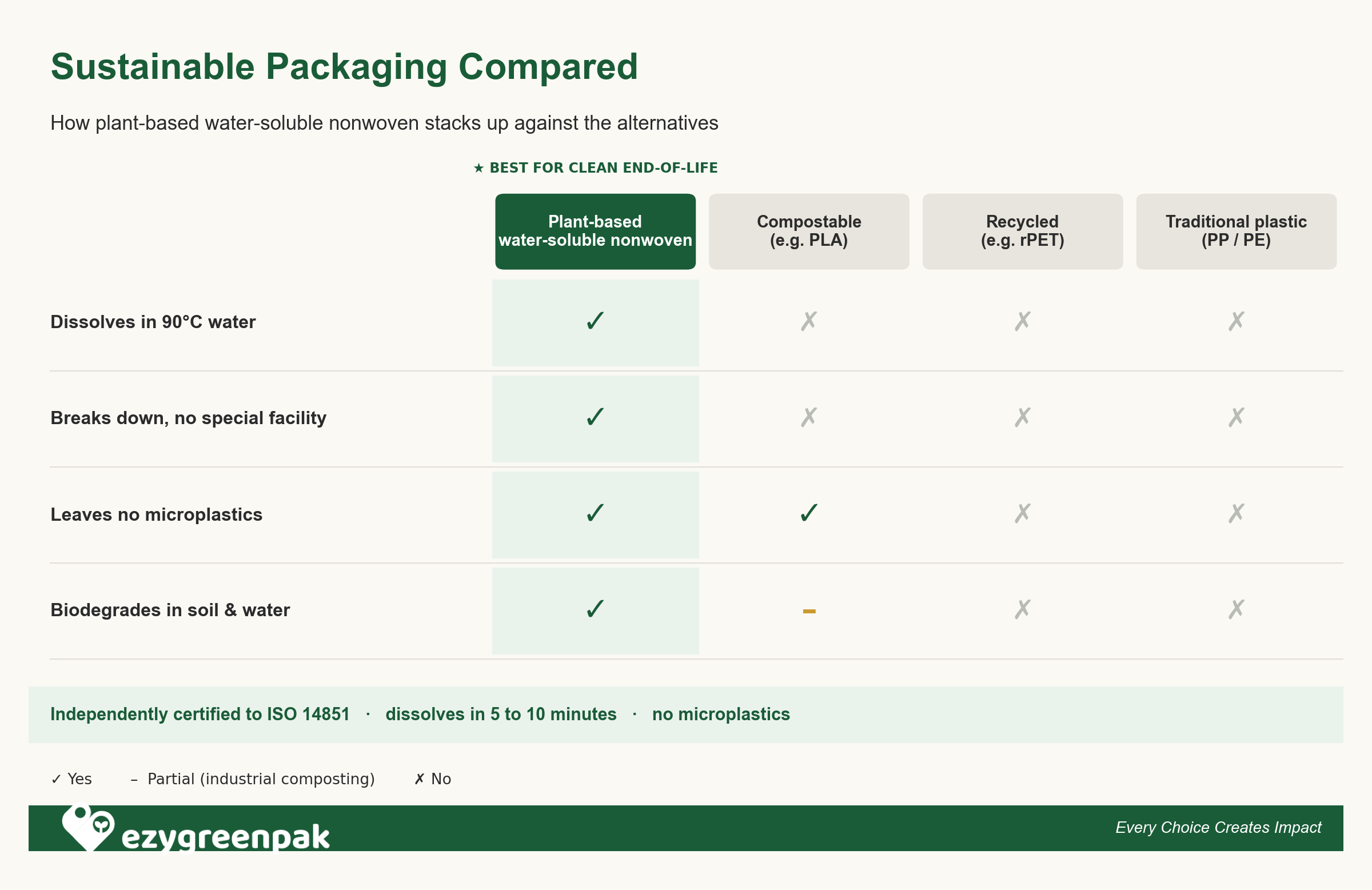
Side-by-side comparison
| Criterion | Plant-based water-soluble nonwoven | Compostable (PLA) | Recycled (rPET) | Traditional plastic (PP / PE) |
|---|---|---|---|---|
| Dissolves in 90°C water | Yes | No | No | No |
| Breaks down without a special facility | Yes | No | No | No |
| Leaves no microplastics | Yes | Yes | No | No |
| Biodegrades in soil and water | Yes | Partial (industrial composting) | No | No |
What each material is best for
Every material has a place. Recycled plastic reduces virgin plastic use. Compostable plastic suits closed-loop events with industrial composting on site. Traditional plastic is cheap and durable. Plant-based water-soluble nonwoven is the better choice when you want a clean end-of-life with no microplastics and no special disposal, while keeping the strength and print quality of an everyday bag.
Frequently asked questions
Is plant-based water-soluble nonwoven better than compostable plastic like PLA?
For everyday use, in most cases yes. Both avoid microplastics, but PLA only breaks down in an industrial composting facility. Plant-based water-soluble nonwoven dissolves in 90°C water within 5 to 10 minutes and continues to biodegrade in ordinary soil and water.
How does it compare to recycled plastic such as rPET?
Recycled plastic lowers virgin material use, but it is still plastic. It does not biodegrade and it sheds microplastics as it breaks apart. Plant-based water-soluble nonwoven leaves no microplastics and is independently certified to ISO 14851.
Are PP non-woven reusable bags a good alternative?
PP non-woven bags are made from polypropylene, a traditional plastic. They are durable, but they do not biodegrade, can take centuries to break down, and shed microplastics. They also need to be reused many times before their footprint is justified.
What about cotton tote bags?
Cotton is natural and biodegradable, but a cotton tote carries a much higher water and carbon footprint per bag and needs to be reused many hundreds of times to break even. Plant-based water-soluble nonwoven is lightweight and low-impact from the first use.
Does it really leave no microplastics?
Yes. It dissolves into the water rather than fragmenting, so nothing remains to form microplastics. It is independently certified to ISO 14851, with over 60% biodegradation within 71 days and over 90% within two years.
New to the material? Start here: What is plant-based water-soluble nonwoven? | See it in action: finisher bags for 74,000 marathon runners
Every Choice Creates Impact.